NEC Article 250.32 & 300.5 • Detached Garages, Shops, Sheds & 50A RV

Detached Garage, Workshop & 100A Subpanel Trenching

Powering a detached garage, woodworking shop, boat lift, backyard studio, or 50A RV pad requires proper feeder sizing, burial depth, and isolated grounding. We trench underground Schedule 40/80 PVC conduits and install 60A–125A subpanels across all 7 cities of Hampton Roads.

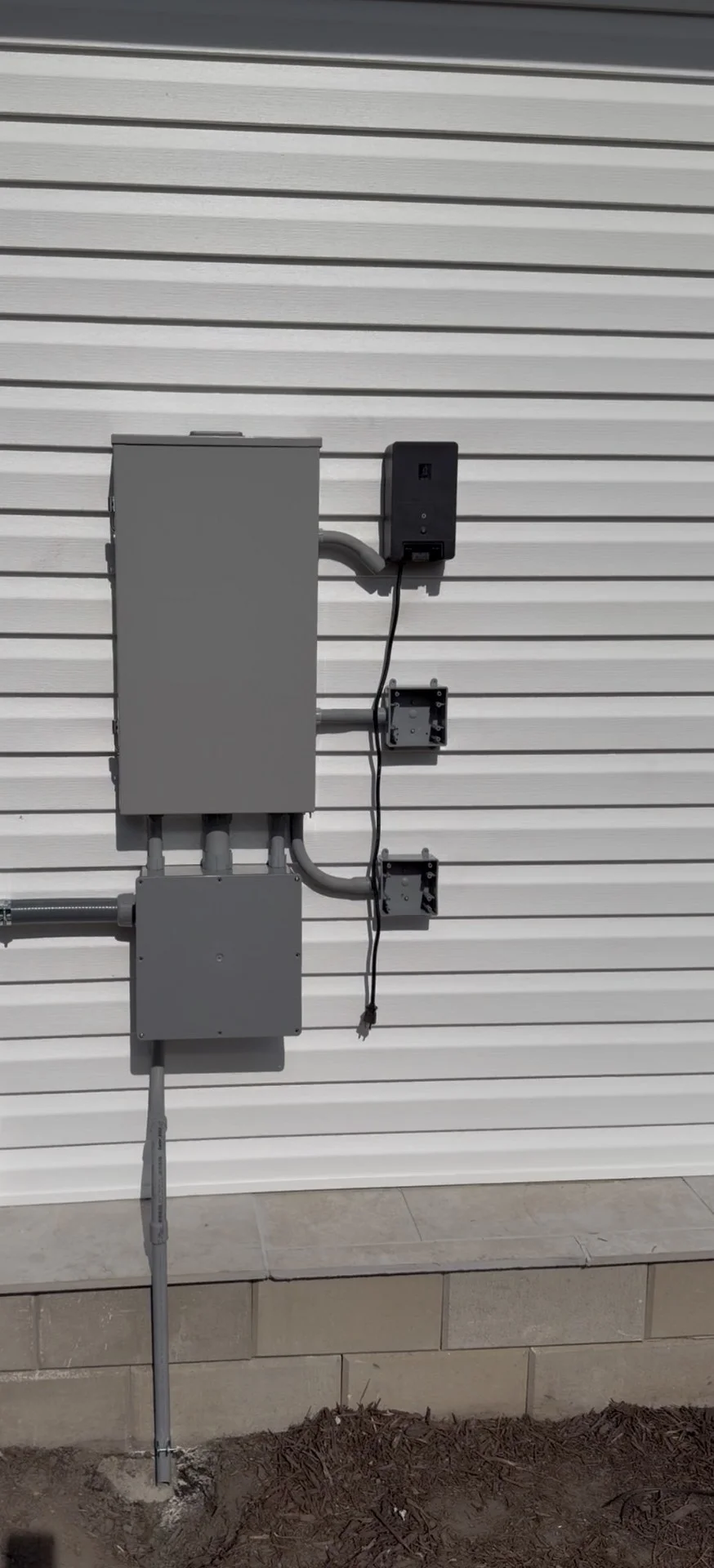
Exterior NEMA 3R subpanel and PVC junction box on vinyl siding with underground PVC riser, liquidtight whips, and two weatherproof boxes
Pricing & Service Overview • Hampton Roads (757)

How much does it cost to run underground power and a 100A subpanel to a detached garage or workshop in 757?

An attached garage 60A–100A subpanel typically costs $950 to $1,650, while trenching underground Schedule 40/80 PVC feeder conduit to a detached garage, workshop, or barn with a 100A main-breaker subpanel, dual NEC 250.32 ground rods, and 120V/240V shop receptacles typically ranges from $1,850 to $3,600 depending on trench footage.

Attached Subpanel
$950 – $1,650 Installed
Detached + Trenching
$1,850 – $3,600 Turnkey
PVC Burial Depth
NEC Table 300.5 (18" Conduit)
Detached Grounding
2x 8-ft Copper Ground Rods + Isolated Neutral
240V Shop & RV Power
Welder, Compressor, Lift & NEMA 14-50 RV
Direct Dispatch
(757) 536-0478
Credentials: Virginia Master Electrician — Licensed & Insured VA Class A Contractor
Call 24/7 Dispatch: (757) 536-0478 →
NEC & VIRGINIA USBC ENGINEERING STANDARDS

Code-Compliant Materials & Technical Execution

NEC 250.32(B)

Floating Neutral Bars & Local Grounding Electrodes

Modern code prohibits bonding neutral and ground together inside any subpanel. Detached structures receive a 4-conductor feeder (L1, L2, Neutral, Equipment Ground), an unbonded floating neutral bar, and two local 8-foot copper-clad ground rods spaced 6+ feet apart.

NEC TABLE 300.5

18-Inch Schedule 40 PVC & Schedule 80 Risers

We call Virginia 811 Miss Utility before digging, trench minimum 18 inches to the top of rigid nonmetallic Schedule 40 PVC conduit, install red underground warning ribbon above the raceway, and sleeve above-grade risers in impact-resistant Schedule 80 PVC.

NEC 210.8

240V Welder, Air Compressor, Mini-Split & 50A RV Circuits

All 120V and 240V garage, shop, and accessory-building receptacles up to 50 amps receive NEC-mandated GFCI breaker protection—powering 2-post car lifts, MIG/TIG welders, dust collectors, mini-split HVACs, and outdoor 50A RV pedestals.

Step-by-Step Detached Garage, Workshop & Exterior Subpanels + Trenching Process in 757

STEP 01

811 Locate & Voltage-Drop Sizing

Mark underground utilities via VA 811 and calculate copper or aluminum XHHW-2 feeder gauge so long runs stay under 3% voltage drop.

STEP 02

Trench Excavation & PVC Conduit

Excavate clean 18"+ trenches, solvent-weld Schedule 40/80 PVC sweeps with expansion fittings, and pull 4-wire THWN-2/XHHW-2 feeders.

STEP 03

Municipal Open-Trench Inspection

Verify burial depth, warning tape, and dual driven copper ground rods with the city electrical inspector prior to backfilling.

STEP 04

Subpanel & 240V Outlet Trim-Out

Mount 60A–125A Square D/Siemens subpanel, isolate neutral/ground bars, and energize shop lights, 20A GFCI quad boxes, and 240V outlets.

100% Real Jobsite Proof

Verified Detached Garage, Workshop & Exterior Subpanels + Trenching Field Work

Unretouched Hampton Roads jobsite photography documented by our licensed Virginia Master Electricians.

Call 24/7: (757) 536-0478
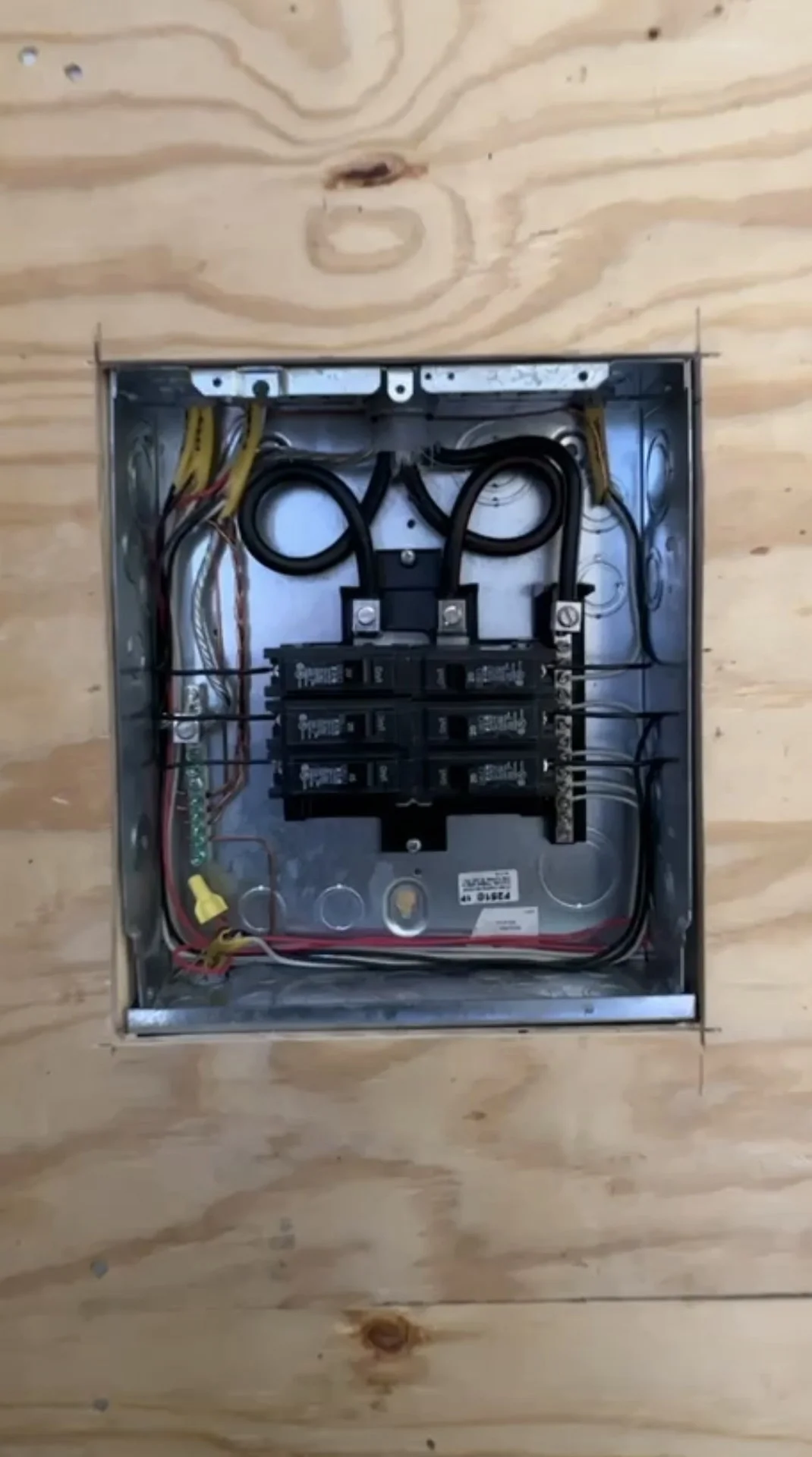
Recessed six-space main-lug electrical subpanel in plywood wall showing looped feeder conductors, six single-pole breakers, and isolated ground bar

Six-Space Main-Lug Subpanel Internal Makeup

Flush-mounted six-space main-lug subpanel in plywood sheathing with dead-front removed, showing looped black feeder conductors, six single-pole breakers, yellow 12 AWG NM-B branch cables, and a separate equipment ground bar.
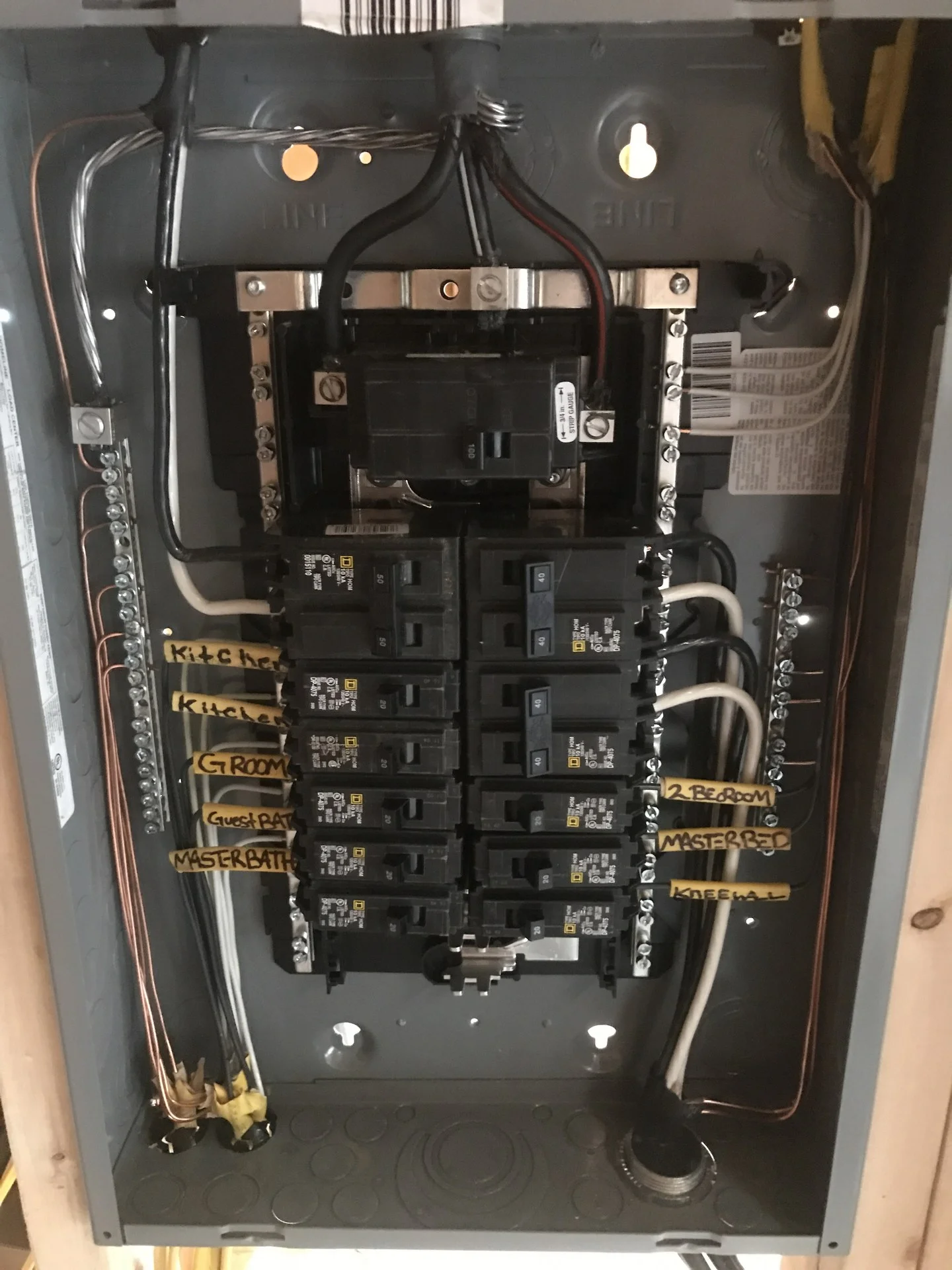
Full-enclosure view of open Square D Homeline 100-amp panel showing top feeder lugs, two-pole breakers, and labeled branch conductors

Full Enclosure View Homeline 100A Panel

Full-height interior view of the Square D Homeline 100A panel showing top-fed main breaker terminations, flanking equipment ground bars, and tagged branch circuits.

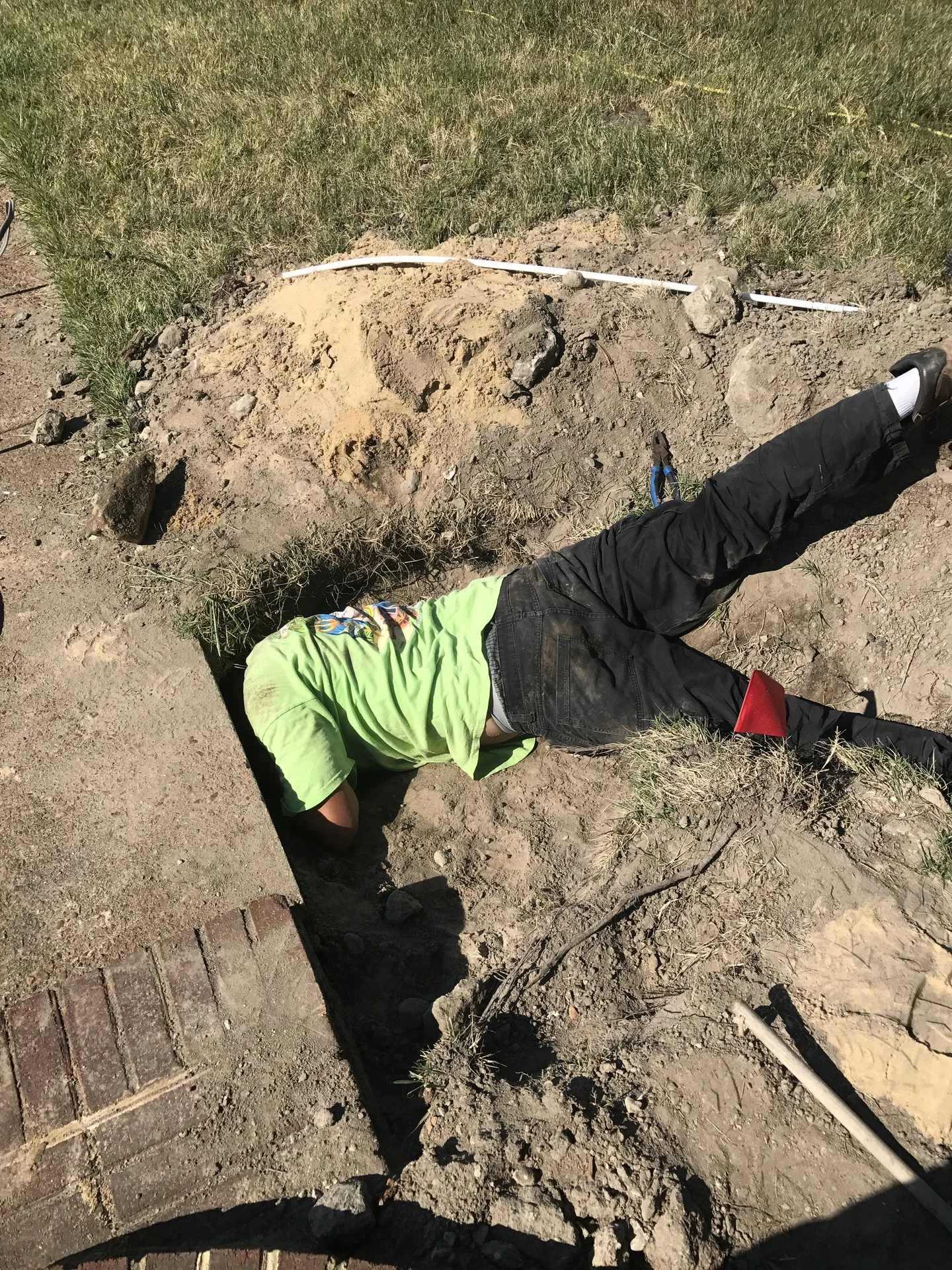
Electrician lying in an excavated dirt trench reaching beneath a concrete walkway to route underground PVC electrical conduit pipe

Sub-Walkway Underground PVC Conduit Trenching

Electrician lying prone on excavated soil reaching beneath a concrete walkway edge to clear a sub-slab path for underground PVC conduit, with lineman pliers and PVC pipe staged nearby.

Instant Estimate & Panel Load Check

Estimate Any Repair or Upgrade

Skip Form — Call (757) 536-0478
Preliminary Turnkey Range (Virginia Beach, VA)$1,800 – $2,250Includes licensed Master Electrician labor, NEC code materials & municipal permit coordination
Confirm by Phone: (757) 536-0478
Common Questions

Detached Garage, Workshop & Exterior Subpanels + Trenching Cost, Code & Permit FAQs

Straight answers from our licensed electricians — or call (757) 536-0478 anytime.

Q. How deep does underground electrical conduit need to be buried for a detached garage or shed in Virginia?

Under NEC Table 300.5, rigid nonmetallic PVC conduit (Schedule 40/80) requires at least 18 inches of cover below grade in residential yards (24 inches under driveways). Direct-burial UF-B cable without conduit requires 24 inches, which is why we strongly recommend full PVC conduit for lifetime protection and future wire upgrades.

Q. Does a detached garage subpanel need its own ground rods?

Yes. Under NEC 250.32(A), any detached building fed by a multi-circuit feeder (subpanel) must have its own local grounding electrode system—typically two 8-foot copper-clad ground rods driven at least 6 feet apart—in addition to the 4-wire equipment grounding conductor run back to the main house panel.

Q. Why must neutral and ground wires be separated inside a subpanel?

Bonding neutral and ground in a subpanel creates parallel return paths for neutral current on metal conduits, grounding wires, and building framing, creating shock and stray-voltage hazards. Neutral and ground are bonded ONLY at the first main service disconnect.

Q. Can you install a 50-amp RV outlet on the side of my house or detached garage?

Yes. Note that Class A/C motorhomes and fifth-wheel campers use a 120/240V 4-prong NEMA 14-50 receptacle, whereas smaller travel trailers use a 120V-only 30-amp TT-30 receptacle (wiring a TT-30 to 240V will instantly destroy camper appliances!). Our electricians verify plug type and test polarity before handoff.

Q. Can my existing 200A house panel support a 100A workshop subpanel?

Usually yes! Feeding a subpanel with a 100A breaker does not mean the shop continuously draws 100 amps—NEC Article 220 calculates actual simultaneous connected loads. We perform a load calculation on your main 200A panel before installation.

24/7 Dispatch: (757) 536-0478